Roller Blinds Melbourne
How to Choose the Right Fabric and Setup for This Climate
When comparing roller blinds in Melbourne, the fabric you choose matters more than the frame colour or the brand name on the box. Melbourne's weather swings hard within a single day — a cool morning can tip into a 35°C afternoon by 3pm. For most homes, a dual-fabric or layered setup — a sunscreen or light-filtering roller for daytime glare and heat paired with a blockout option for bedrooms and west-facing rooms — outperforms a single generic blind picked on looks alone.
Why Melbourne's climate changes the decision
Melbourne's climate genuinely behaves like four seasons in one day, with hot northerly winds sometimes replaced by a 15°C temperature drop within the hour. A blind that's great in a milder city can still leave a west-facing living room uncomfortably hot during a heatwave, then do little during a cold winter evening when you want to retain warmth. That's why orientation matters as much as room type.
North & West facing
Cop the most direct heat, especially before sunset in summer. Benefit from a denser sunscreen weave or a light-reflective backing to cut radiant heat before it hits the glass.
East facing
Sharp morning glare but comparatively less heat load, so a lighter sunscreen or light-filtering fabric is usually enough.
South facing
Get the least direct sun and are the easiest to treat. Often where budget-friendly light-filtering fabrics make the most sense.
The three main fabric categories
Blockout Roller Blinds
A tightly woven or coated fabric that stops light and outside visibility almost completely. The right call for bedrooms, media rooms, and any west-facing space where afternoon heat and glare are a problem. Because a fully closed blockout blind also shuts out the view, most households don't use them room-wide.
Best for: Bedrooms · Media rooms · West-facing rooms
Sunscreen Roller Blinds
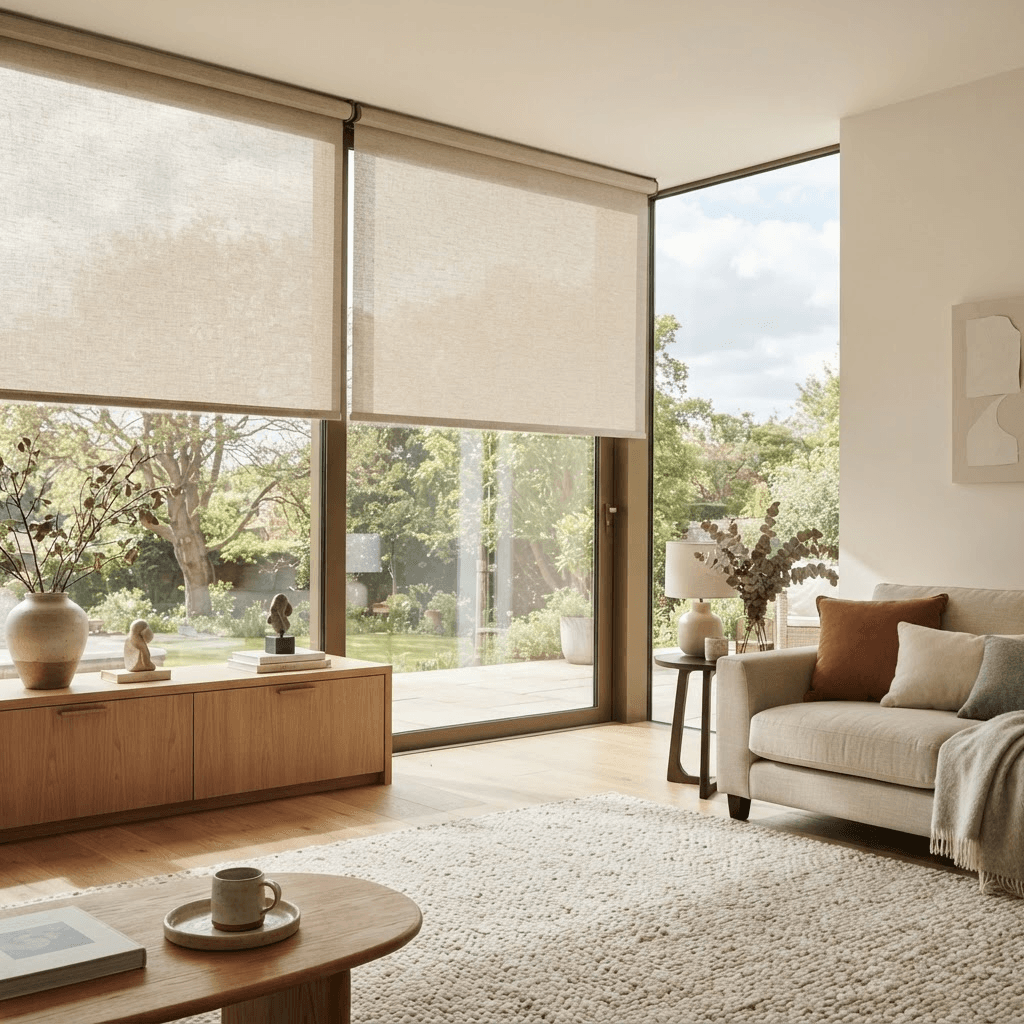
Woven from a mesh-like fabric with an "openness factor" (typically 1%–14%) that filters UV and heat while keeping the outside view intact. Usually the best fit for living areas, kitchens, and home offices where you want to cut glare on a screen without losing the connection to outside. A lower openness percentage blocks more heat and light.
Best for: Living areas · Kitchens · Home offices
Translucent (Light-Filtering)
Sits between the two: softens and diffuses light without blocking it, with little heat rejection or night-time privacy once interior lights are on. Works well in south-facing rooms or as a secondary layer behind a blockout blind in a double-roller setup.
Best for: South-facing rooms · Double-roller layers
For a lot of Melbourne homes, the practical answer isn't picking one category for the whole house — it's matching the fabric to each room's orientation and use, which is where a proper in-home consultation earns its cost over a one-size-fits-all order.
What's different for newer builds in Cranbourne and Clyde
Growth-corridor suburbs like Cranbourne and Clyde present a different problem to established inner-Melbourne homes. Many properties are recent builds with larger glass expanses, open-plan living zones, and little established tree cover for shade — a combination that pushes heat load higher than in an older, tree-lined suburb.
- Larger sliding-door and window combinations often benefit from motorised roller blinds, since a single wide blind can be heavy and awkward to operate manually several times a day.
- New-build display-home windows are frequently north or west facing to maximise listing-photo light, which means afternoon heat is a bigger factor than the display home suggests.
- Because these homes are newer, there's typically no existing pelmet or recess to work around, which makes it easier to fit a double-roller (blockout plus sunscreen) system cleanly.
Cord safety: a legal requirement, not an optional extra
Buying a corded roller blind anywhere in Australia is covered by a mandatory federal safety standard for corded internal window coverings. The rules require warning labels, cord safety components such as cleats or tensioners to stop a loose cord forming a hazardous loop, and specific installation practices — largely because of the strangulation risk loose cords pose to young children.
If you have kids, visiting grandchildren, or simply want to avoid retrofitting safety hardware later, ask upfront whether a supplier defaults to cordless (chain-tensioned, spring, or motorised) mechanisms, which sidestep the issue entirely.
Cost and value: what actually drives the price
The price of roller blinds is shaped by a handful of factors more than by brand: fabric grade, width and drop, operation type (chain vs. motorised), and the number of blinds and installation complexity. Getting an accurate figure for your home depends on an in-home measure, since window sizes, mounting depth, and fabric choice all move the number.
Quick decision guide
Bedroom or media room, any orientation
Blockout fabric, or a double roller with sunscreen behind it for daytime light without fully opening the blind.
Living room or kitchen, north or west-facing
Sunscreen fabric with a lower openness percentage for more heat rejection, or a dual system for all-day flexibility.
Home office
Sunscreen fabric to cut screen glare while keeping the window usable during video calls.
South-facing or low-heat window
Light-filtering fabric is usually enough and is typically the more affordable option.
Wide sliding doors or large new-build glazing (Cranbourne, Clyde)
Motorised operation, sized and reinforced for the wider drop.
Frequently asked questions
Do roller blinds actually reduce cooling costs in a Melbourne summer?
A well-chosen sunscreen or blockout fabric on north and west-facing windows meaningfully cuts the radiant heat entering the room during the hottest part of the day, which reduces how hard air conditioning has to work to hold a set temperature. The effect is more noticeable on rooms with larger glass and direct afternoon sun than on shaded or south-facing windows.
Can I use roller blinds instead of curtains for winter warmth too?
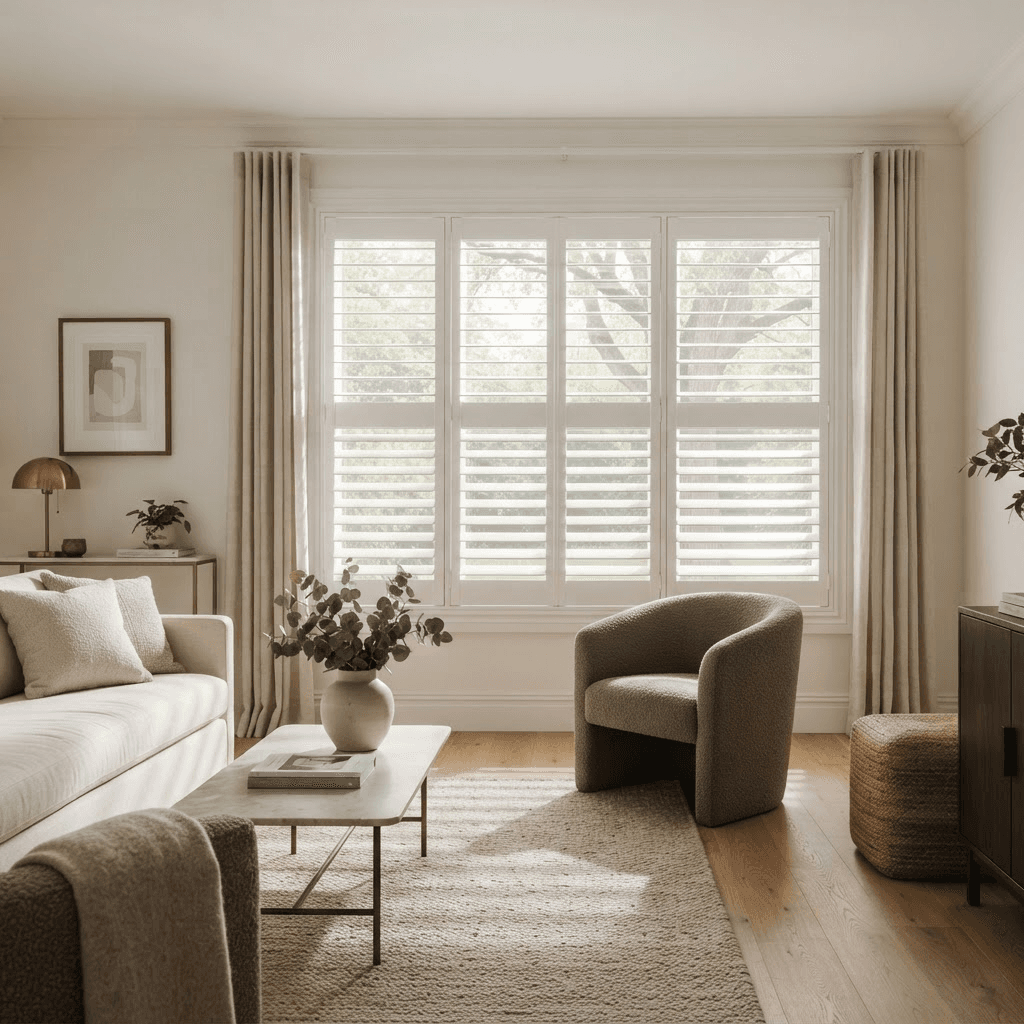
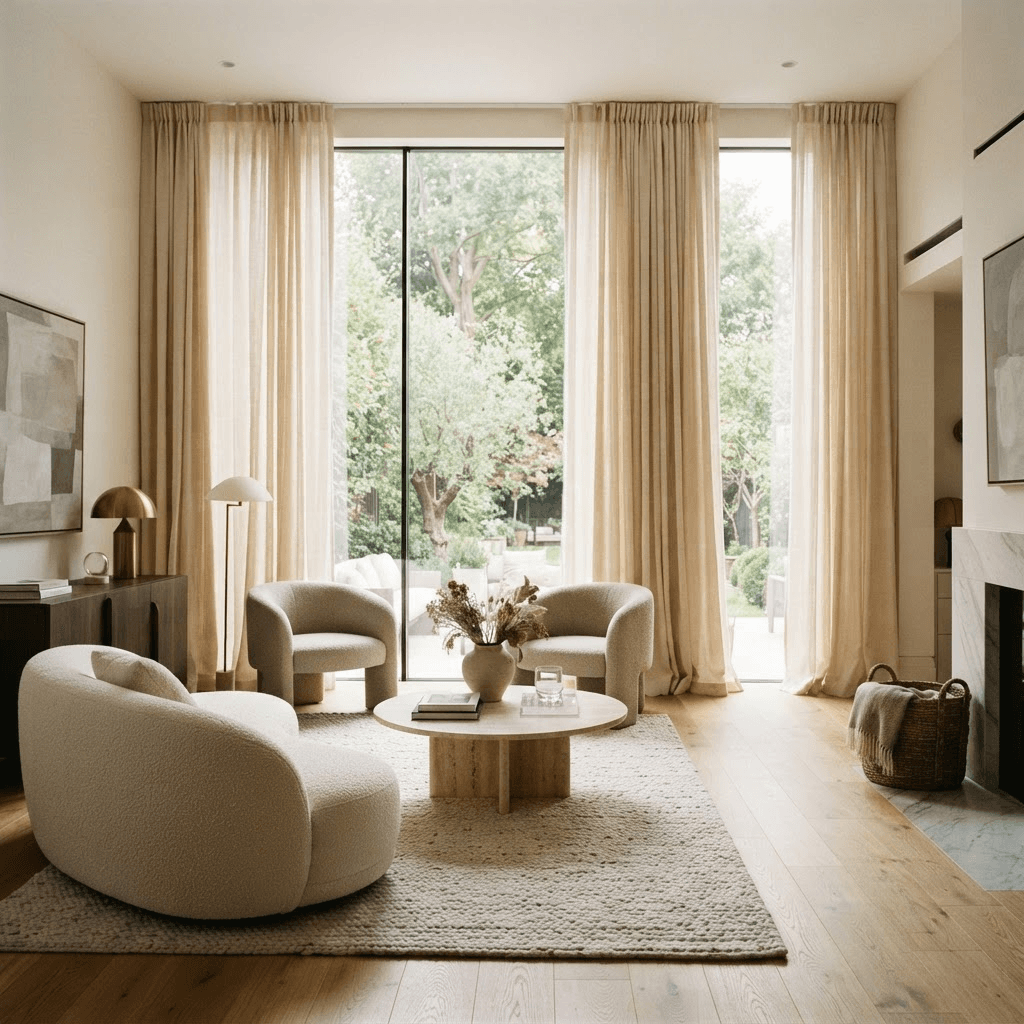
Blockout roller blinds help retain some warmth by adding a barrier over the glass at night, but they're not as effective as thermal-lined curtains for winter insulation specifically. Many Melbourne homes use roller blinds for daytime heat and glare control and add curtains where winter thermal performance is the priority.
Are cordless roller blinds worth the extra cost over corded ones?
If the household includes young children, cordless (chain-tensioned or motorised) blinds remove the ongoing responsibility of securing loose cords correctly every time, which is the main safety concern behind Australia's mandatory standard for corded coverings. For adult-only households without regular child visitors, a correctly installed corded blind that meets the standard is still a legitimate lower-cost option.
Should I choose the same roller blind fabric throughout my home?
Not necessarily. A consistent colour palette can make the interior feel cohesive, but different rooms often have different functional requirements. A west-facing bedroom may benefit from blockout fabric, while a north-facing living room may work better with sunscreen fabric that reduces glare while preserving the outside view.